Roundabout Clockface Method for Lane Position
Follow us on Youtube - Books - Theory Test - Online Courses - Lessons
Roundabout Lane Position Made Simple: Why the Clockface Method Still Works
Roundabout lane position using the clockface method - Figuring out lane position on roundabouts should be one of the easiest things to do - Yet more people than ever have problems with it. Using the clockface method on roundabouts is a fantastic way to do several things.
1 - It is a fantastic time tested method for figuring out lane position on approach to roundabouts
2 - Deciding gaps - It provides a good guide for how to judge gaps in traffic on roundabouts
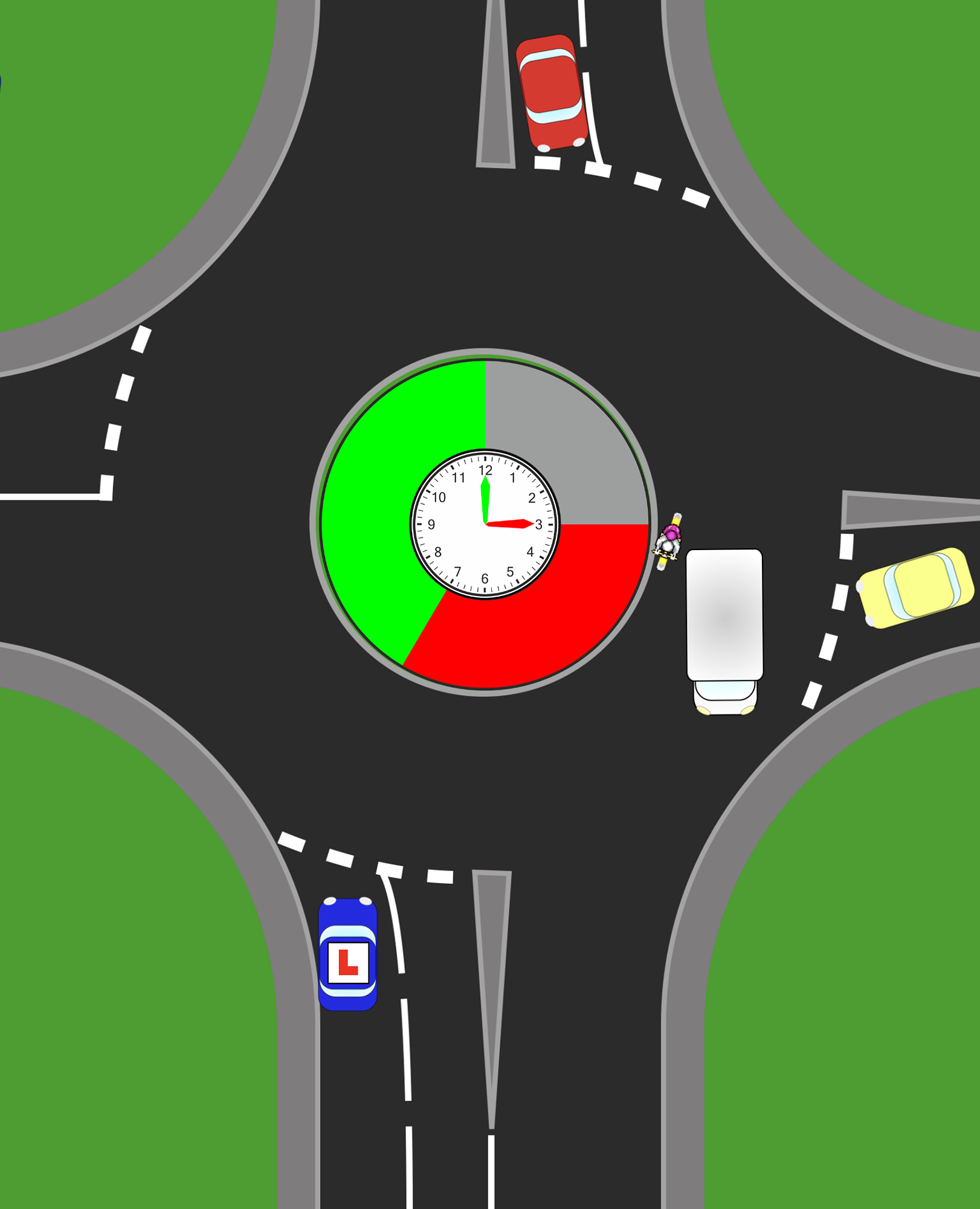
3 - Deciding if it is unsafe to go - Using what is known as a danger zone to determine should i go or not
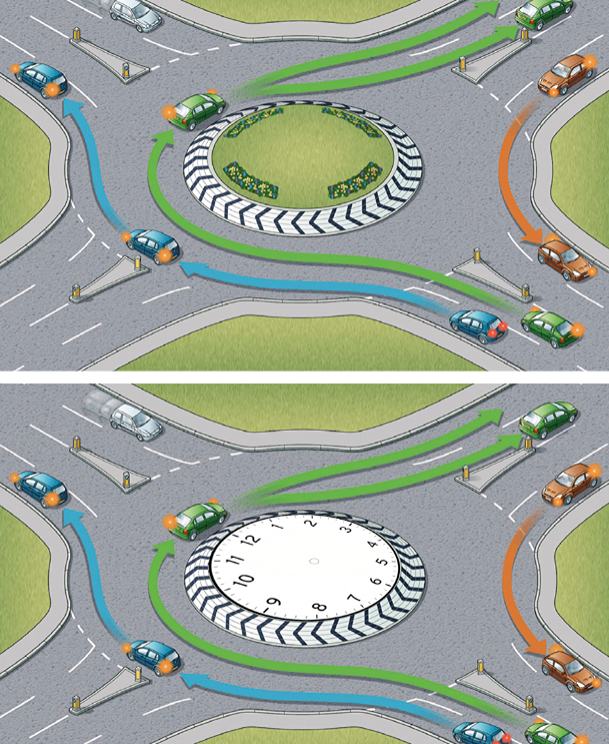
(Top Picture the official DVSA Highway code and Essential Skills picture Bottom picture - Clockface added) - Simple isn't it!
Lane Positon and the Clockface Method
Figuring out lane position on roundabouts should be one of the easiest parts of driving. And yet—more learners and even experienced drivers are getting it wrong than ever before.
The problem isn’t ability. It’s confusion.
Too many people are trying to memorise rules without truly understanding what’s happening around them. That’s where a simple, time-tested method comes back into its own—the clockface method.
It’s not new. It’s not flashy. But it works—and more importantly, it helps drivers think, not just react.
Think of the roundabout as a clock
What Is the Clockface Method?
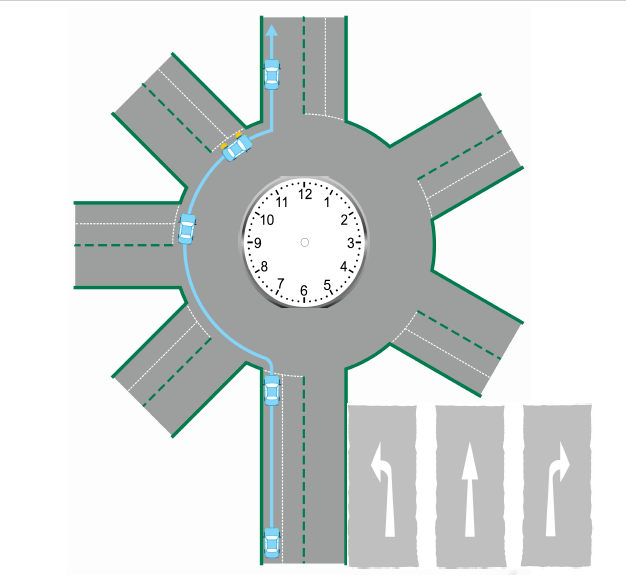
Imagine the roundabout as a clock:
You approach from the 6 Position
If the exit that you need is
12 o’clock or before = Left lane
If the exit is after 12 = right Lane
UNLESS the road markings say different
From this simple visual, you can begin to make clearer, calmer decisions.
Roundabout Clockface - A Reliable Guide for Lane Position
A Reliable Guide for Lane Position
One of the biggest struggles for learners is knowing which lane to use on approach.
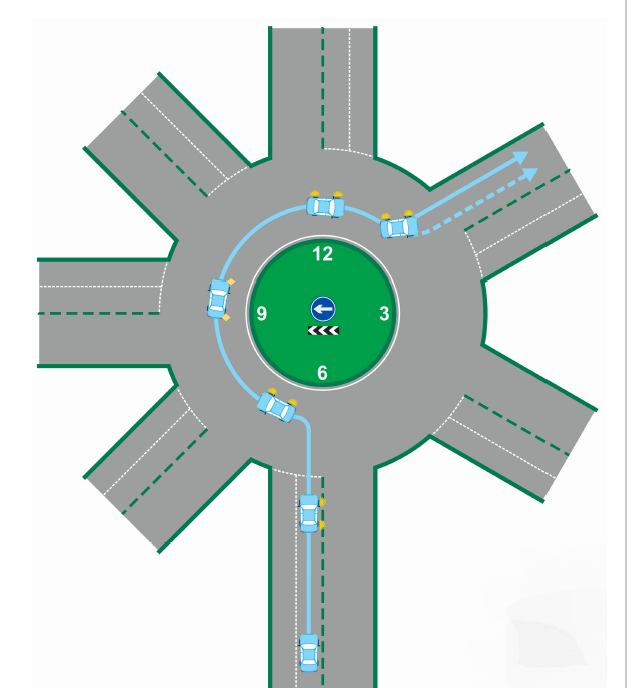
The clockface method gives you a solid starting point:
Up to 12 o’clock (left + straight ahead) → usually left lane
Past 12 o’clock (turning right) → usually right lane
Simple. Logical. Easy to apply.
Now, let’s be clear—like most things in driving, there are exceptions. Road markings, signs, and layout always take priority. But if there’s no clear guidance, this method gives you a dependable fallback.
It’s how drivers have been taught for years—and for good reason.
Judging Gaps: Reading Traffic Properly
Judging Gaps: Reading Traffic Properly
Here’s where the clockface method really comes into its own.
When you’re approaching a roundabout, you’re not just picking a lane—you’re deciding whether it’s safe to go.
Using the clockface idea helps you understand where danger is coming from.
Think of vehicles already on the roundabout:
If a vehicle is approaching from your right (around 3 o’clock), it may affect you
But more importantly, you track where it is heading
But if the car is at or BEFORE the 3 position it should be safe to go
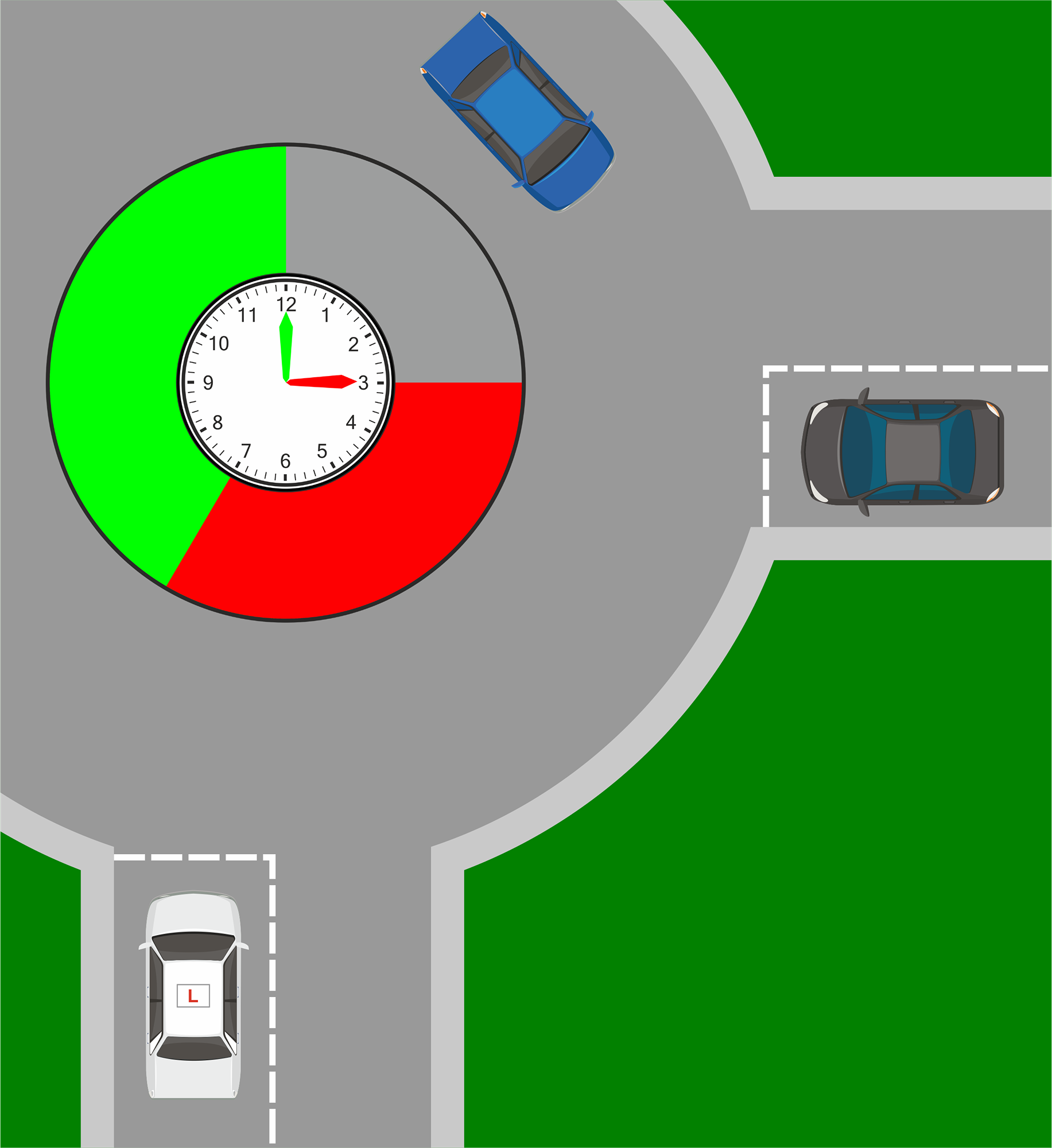
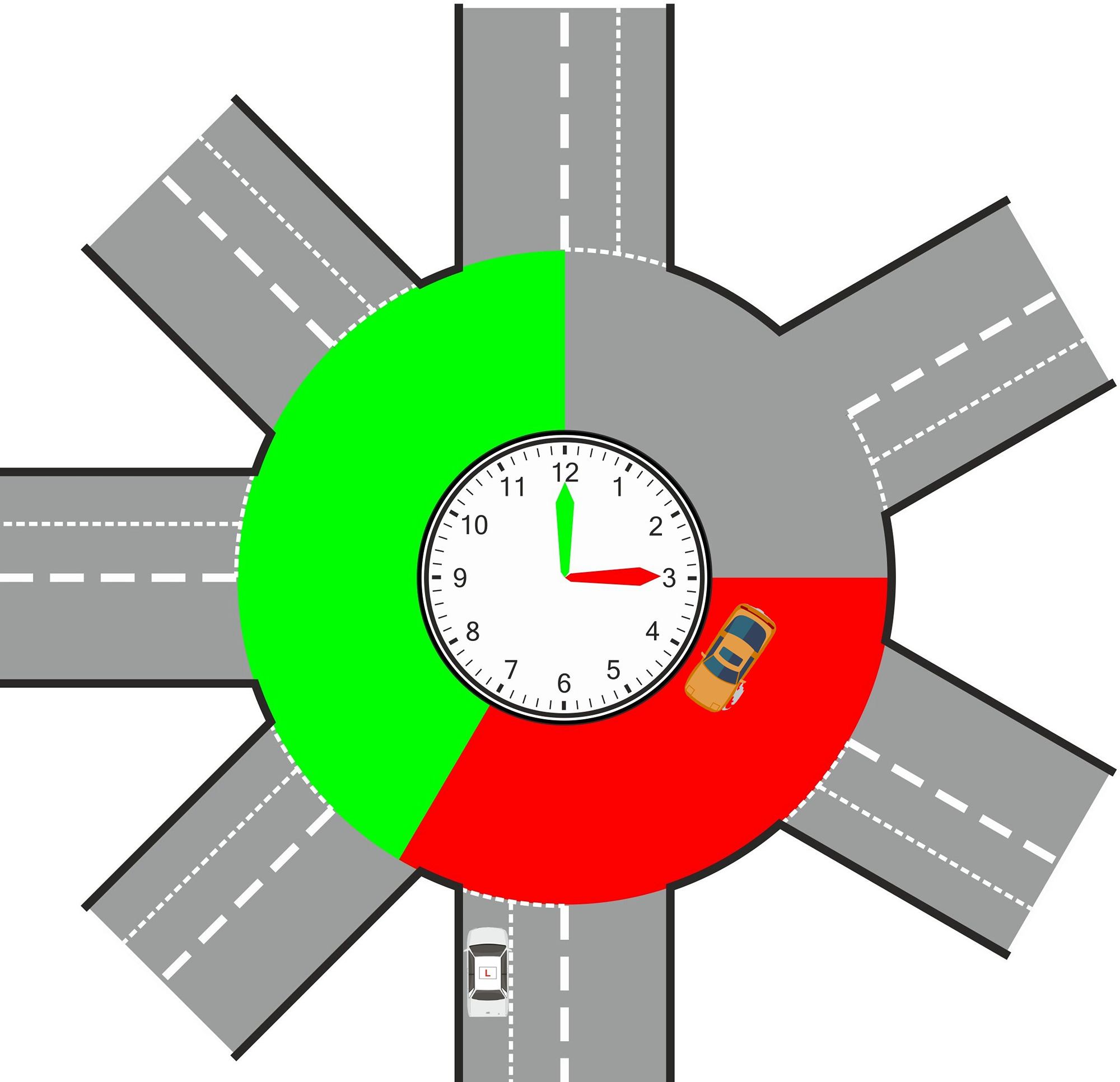
Dangerzone using Clockface
The “Danger Zone”: Knowing When NOT to Go
A powerful concept linked to the clockface method is the danger zone.
Picture the roundabout again like a clock.
The highest risk area is roughly between 3 o’clock and 7 o’clock
If a vehicle is within this zone, there’s a strong chance it could cross your path or affect your entry.
So instead of rushing or hesitating blindly, you now have a simple rule of thumb:
If a vehicle is in the danger zone → be cautious or wait
If it has passed beyond it → your opportunity may be opening
This takes the guesswork out and replaces it with structured thinking.
Vehicle First Road Second
Vehicle First, Road Second
Here’s the part that transforms everything.
Most learners are taught to “drive the roundabout.”
The better approach?
Read the vehicle, then the road.
Because real-world driving isn’t tidy:
Drivers don’t always signal
Some turn late—or not at all
Others go straight from the right lane
Some even drive straight over mini roundabouts
So if you rely purely on layout, you’ll get caught out.
Instead, focus on:
Position – where are they placed?
Speed – are they slowing or continuing?
Signals – helpful, but not always reliable
Wheel direction – often shows intent early
Behaviour – hesitation, commitment, uncertainty
A simple coaching line that works every time:
“What is that car actually doing?”

Why this Matter more than ever
Why This Matters More Than Ever
Modern traffic is faster, busier, and less predictable.
Roundabouts leave less time to think and react. That’s why having a clear, repeatable system matters.
The clockface method gives you:
Structure
Clarity
Confidence
It doesn’t replace observation—it supports it.
Roundabout Clockface
There’s a reason this method has stood the test of time.
It’s not about rigid rules—it’s about giving drivers a framework to make better decisions.
Use the clockface to guide your position.
Use the danger zone to judge your timing.
But above all—watch the vehicles, not just the road.
Because in the real world, it’s not the roundabout that causes problems…
…it’s the people on it.