Pedestrian Crossings Explained

Pedestrian Crossings Explained
Pedestrian crossings are a common topic in the UK theory test and the practical driving test.
You need to recognise the different types of crossings and understand the rules that apply to each one.
Many theory test questions ask about who has priority, what the traffic lights mean, and when you should stop or proceed.
Understanding crossings helps you keep pedestrians, cyclists, and horse riders safe.
Knowing the differences between zebra, pelican, puffin, toucan, Pegasus, parallel, and staggered crossings can help you avoid easy mistakes in the test.
Zebra Crossing
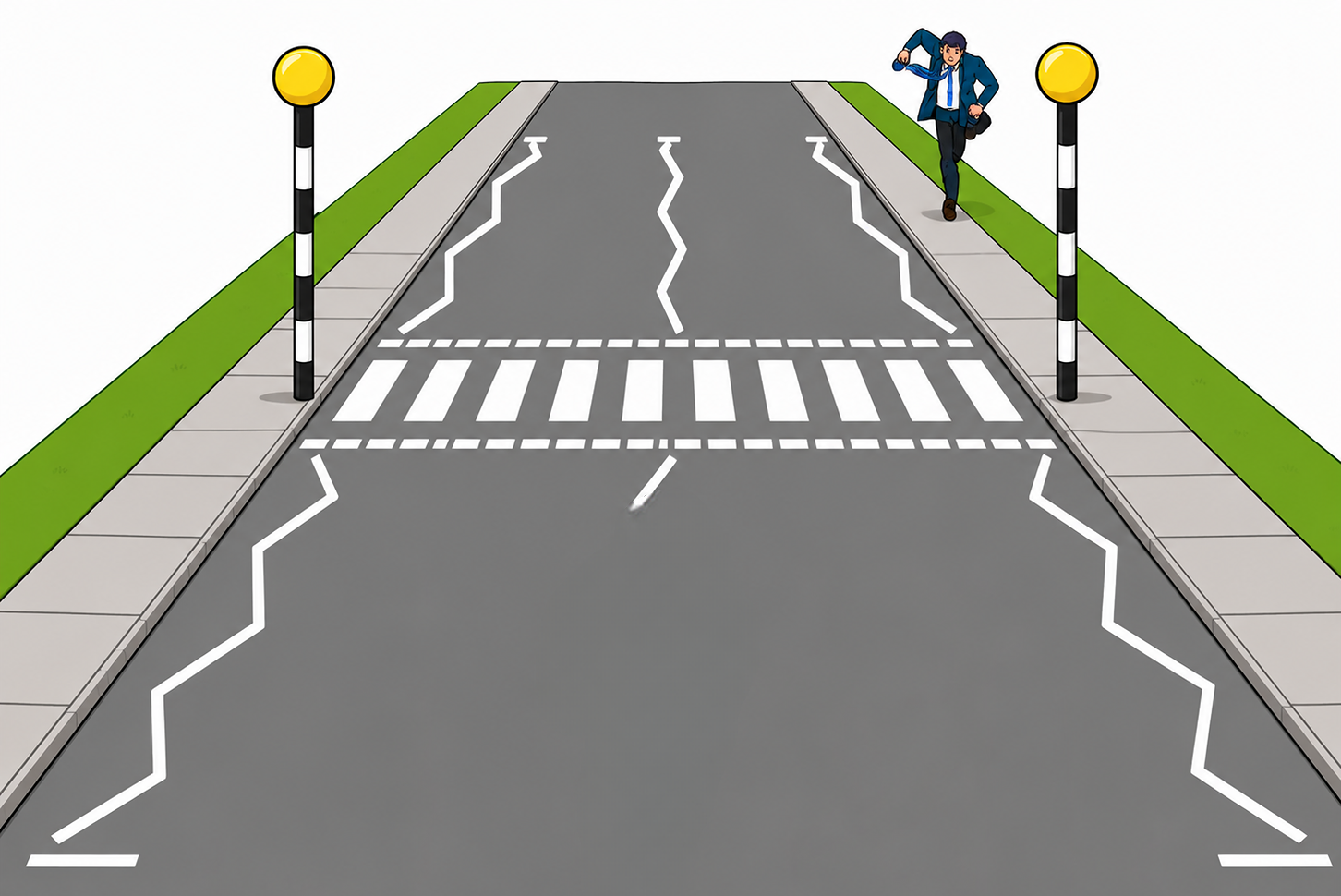
A zebra crossing is a pedestrian crossing marked by black and white stripes across the road, usually accompanied by flashing amber beacons known as Belisha beacons.
Drivers should approach a zebra crossing at a speed that allows them to stop safely if someone is waiting to cross. You must give way to pedestrians who have stepped onto the crossing, and it is good practice to be prepared to stop for anyone waiting at the kerb.
Never overtake the vehicle nearest the crossing or park within the zig-zag markings, as these restrictions help keep pedestrians visible and improve safety.
Extra care should be taken in poor weather, at night, and around children, older pedestrians, or people with disabilities who may need more time to cross.
Zebra Crossing with Centre Refuge
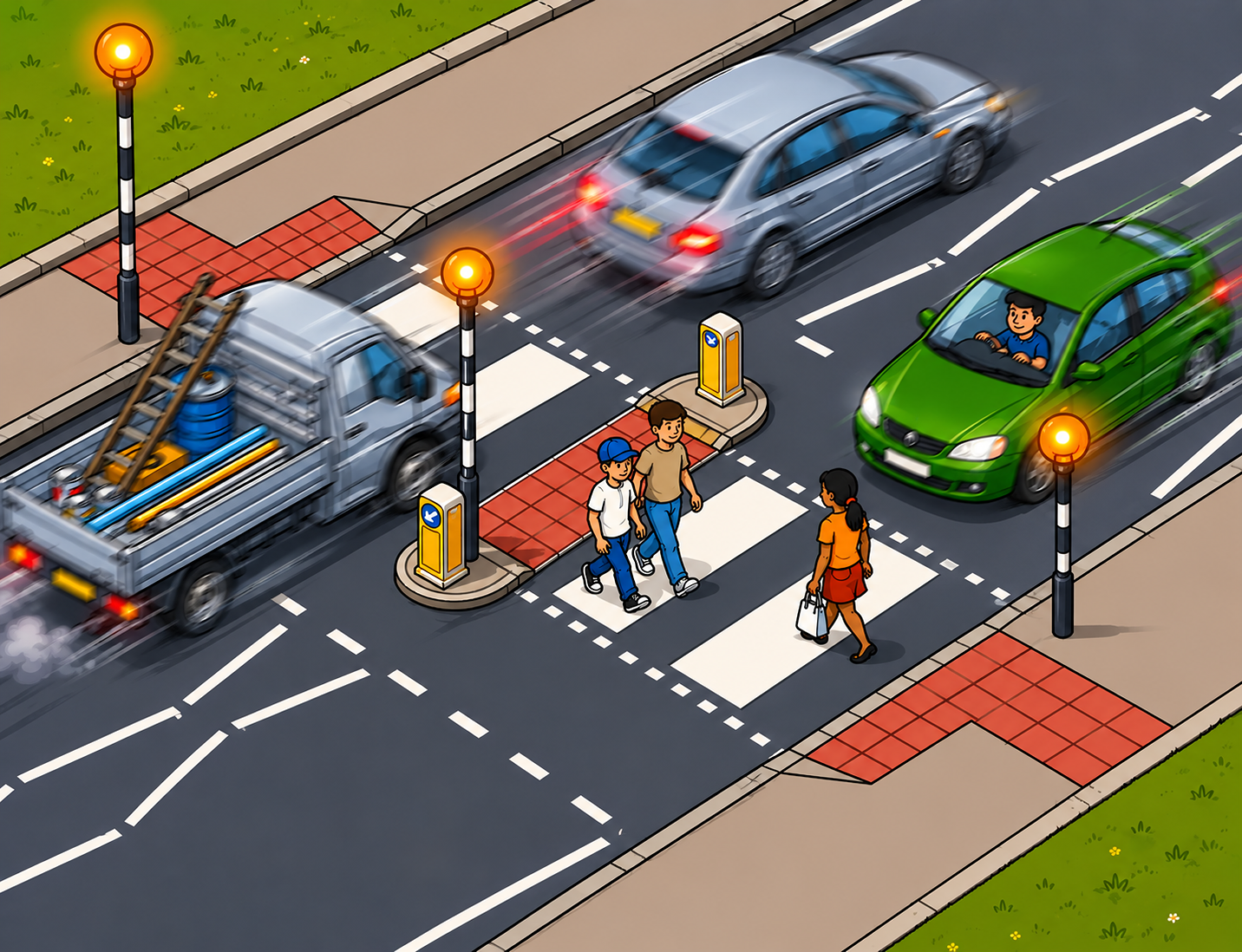
A zebra crossing with a centre refuge island allows pedestrians to cross the road in two separate stages.
The refuge provides a safe waiting area between the two directions of traffic.
Drivers must give way to pedestrians who have stepped onto their side of the crossing.
Pedestrians can stop safely on the refuge before crossing the second half of the road.
Approach at a speed that allows you to stop safely if someone is waiting to cross.
Take extra care, as pedestrians may emerge from behind the refuge unexpectedly.
Parallel Crossing
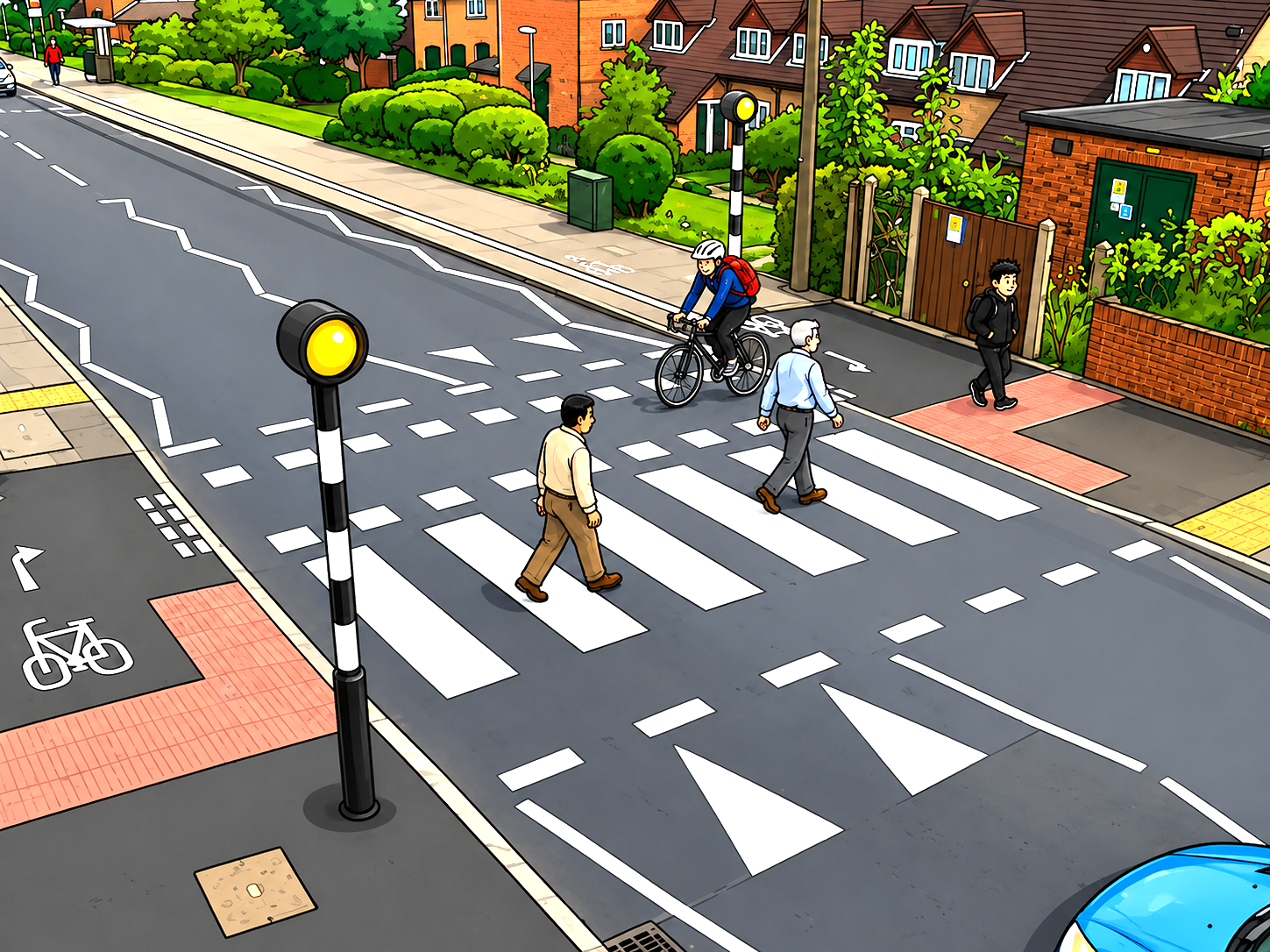
A parallel crossing combines a zebra crossing for pedestrians with a separate crossing area for cyclists.
Pedestrians and cyclists can cross the road side by side using their designated sections.
Drivers must give way to pedestrians on the zebra crossing and should be prepared to stop for cyclists using the cycle crossing.
The crossing is marked with pedestrian stripes and a clearly separated cycle route.
Approach with caution, as cyclists may cross at a higher speed than pedestrians.
Always check carefully for both pedestrians and cyclists before proceeding.
Pelican Crossing
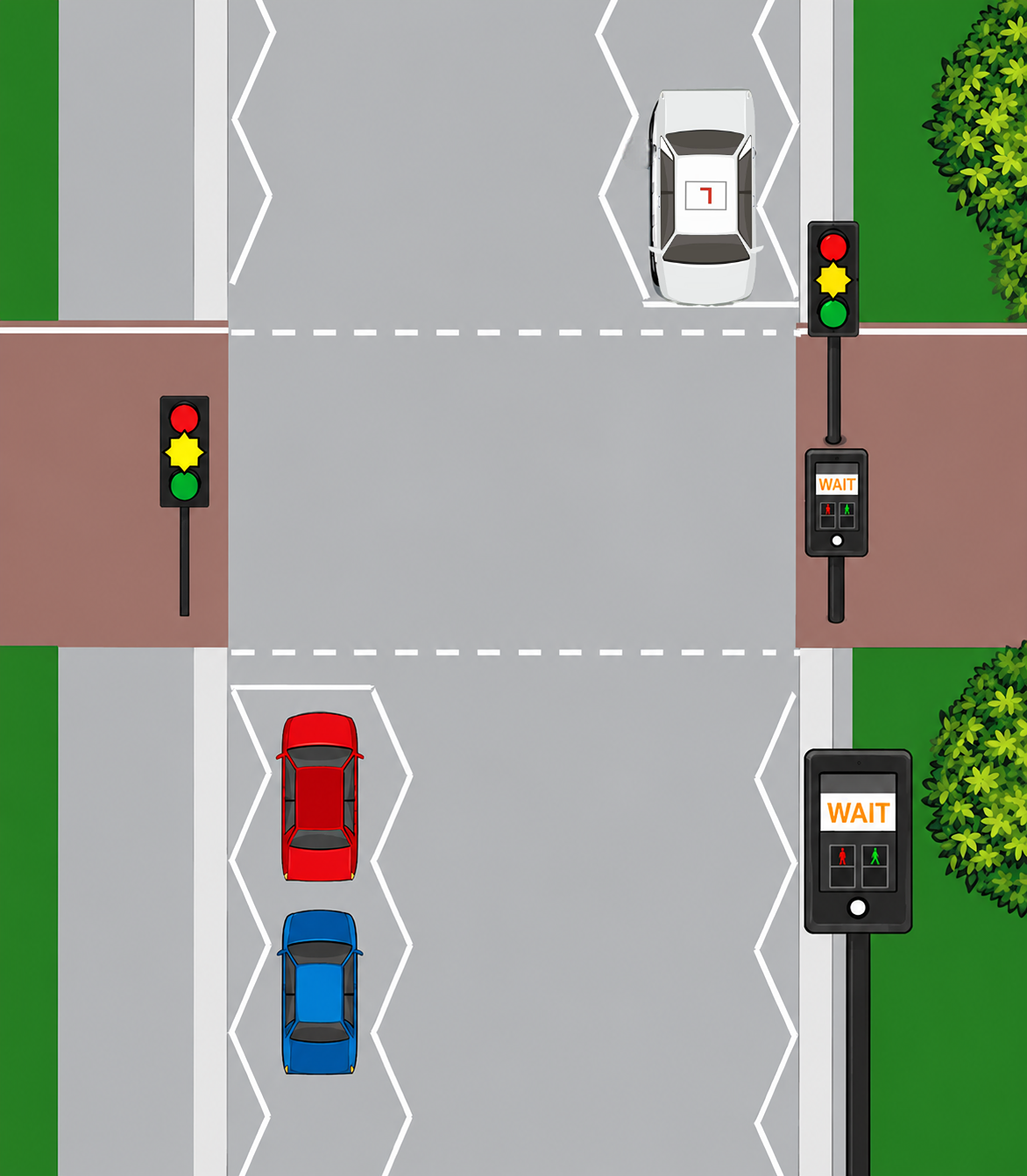
A pelican crossing is a signal-controlled pedestrian crossing operated by a push-button.
Drivers must stop when the traffic lights show a steady red light.
A flashing amber light means drivers may proceed if the crossing is clear of pedestrians.
Approach with care and be prepared to stop if the lights change.
Always check that all pedestrians have finished crossing before moving off.
Pufin Crossing
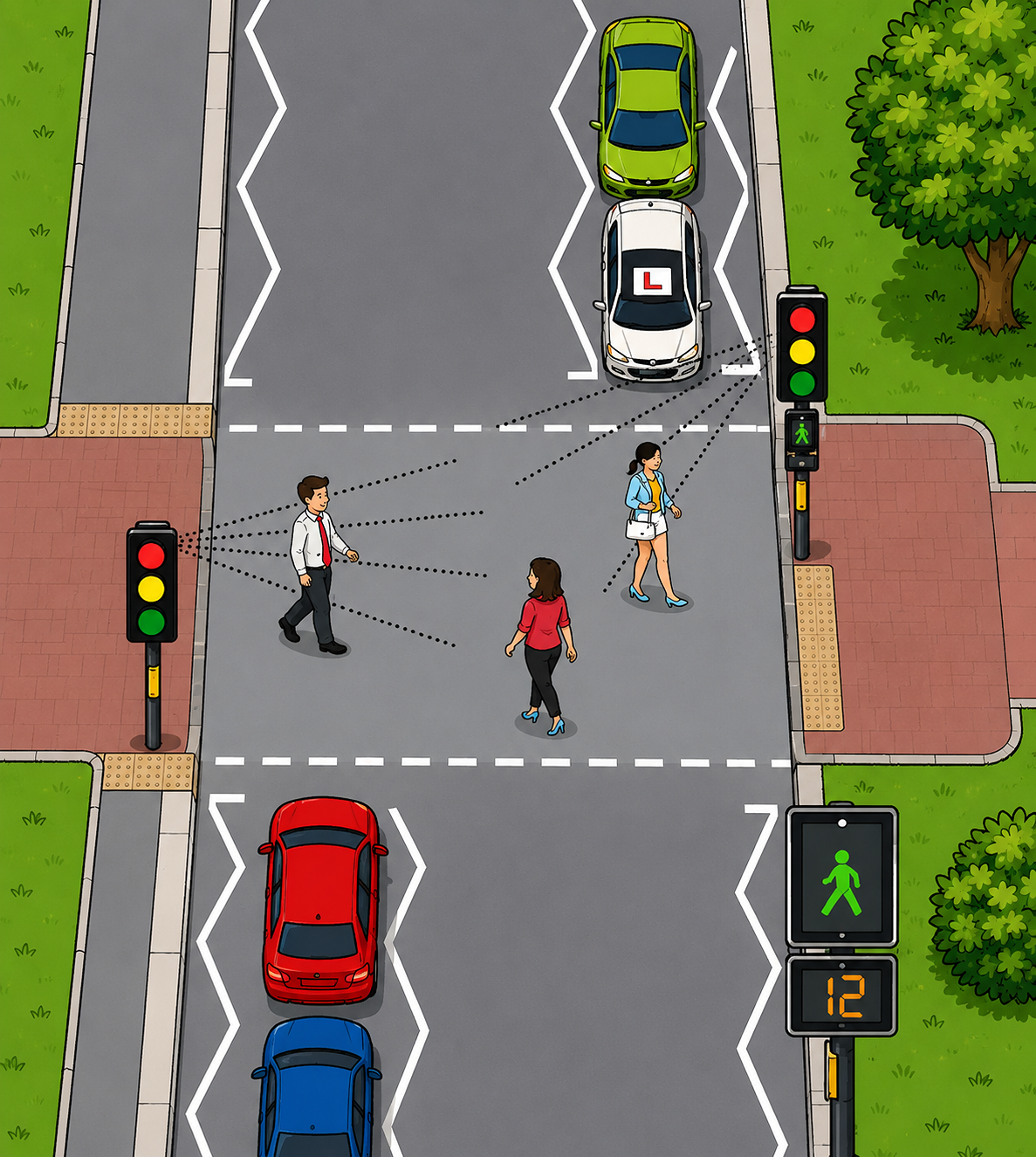
A puffin crossing is a signal-controlled pedestrian crossing that uses sensors to detect pedestrians.
Pedestrians press a button and wait for the green man signal, which is displayed on the crossing pole.
The sensors can extend the crossing time if pedestrians are still crossing.
Drivers must stop when the traffic lights show a red light.
Unlike a pelican crossing, there is no flashing amber phase for drivers.
Always wait until the lights change and the crossing is completely clear before proceeding.
Toucan Crossing
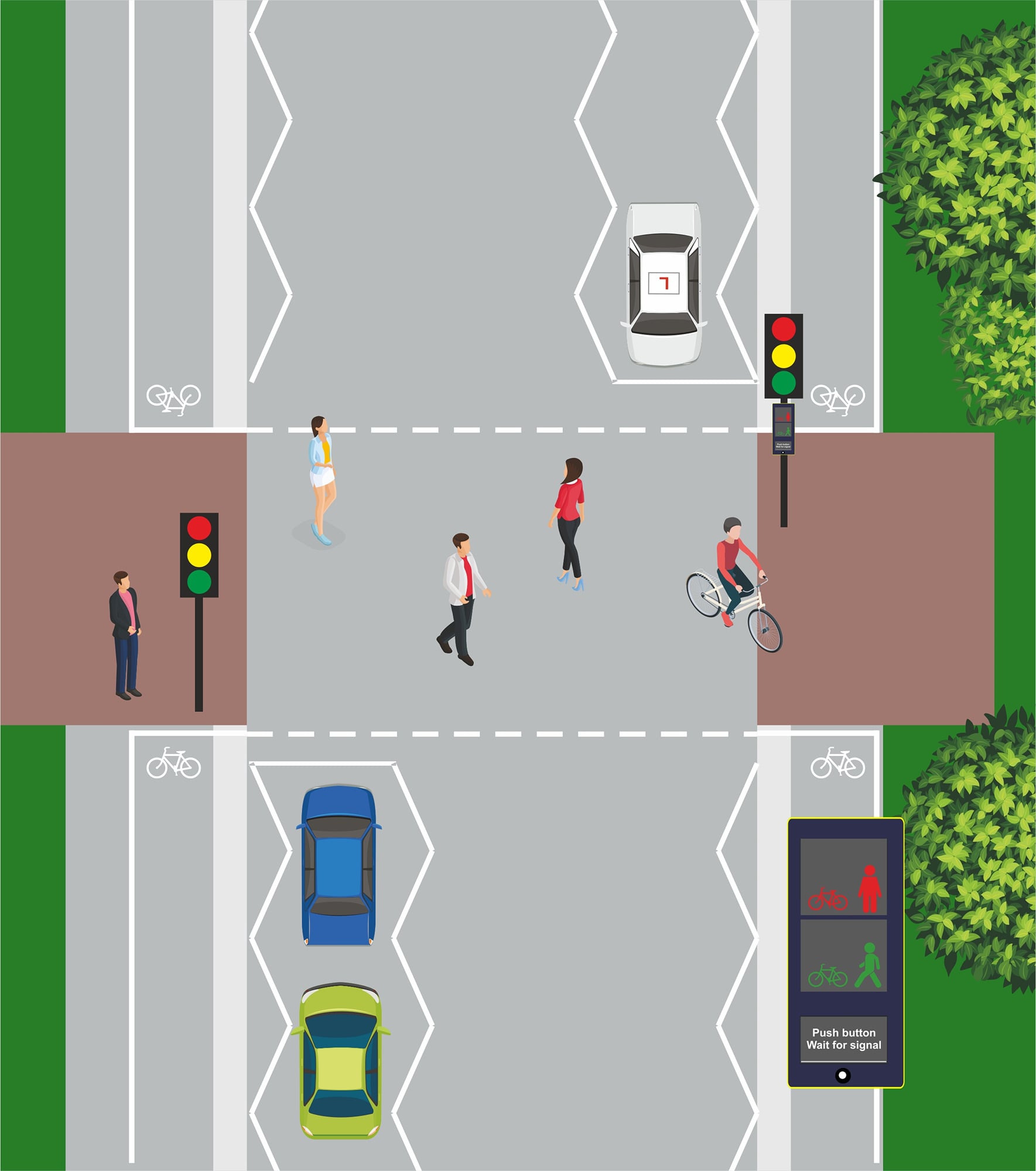
A toucan crossing is a signal-controlled crossing designed for both pedestrians and cyclists.
Pedestrians and cyclists can cross together without cyclists needing to dismount.
Users press a button and wait for the green signal before crossing.
Drivers must stop when the traffic lights show a red light.
Toucan crossings are often found on shared-use paths and cycle routes.
Always check carefully for both pedestrians and cyclists before proceeding when the lights change.
Pegasus Crossing
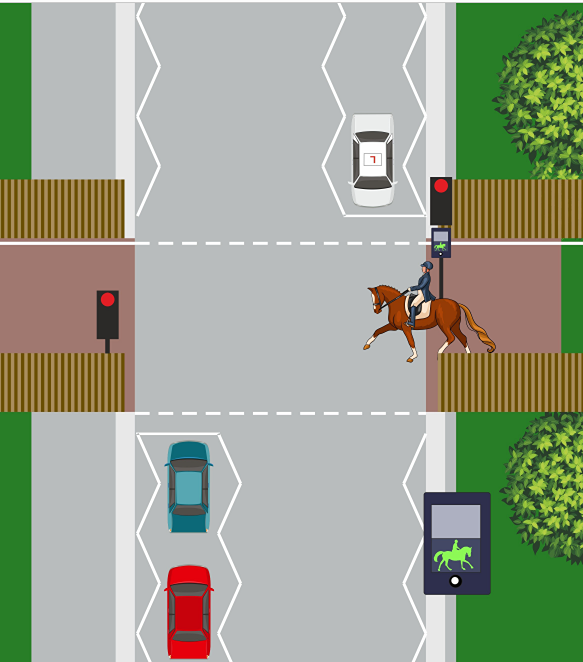
A Pegasus crossing is a signal-controlled crossing designed for horse riders, pedestrians, and cyclists.
It features a higher push-button control that can be reached by riders without dismounting.
Horse riders cross the road using a designated route alongside pedestrians and cyclists.
Drivers must stop when the traffic lights show a red light.
Approach with caution, as horses can be unpredictable and may be startled by traffic.
Always wait until all users, including horses, have safely crossed before proceeding.
Staggered Crossing
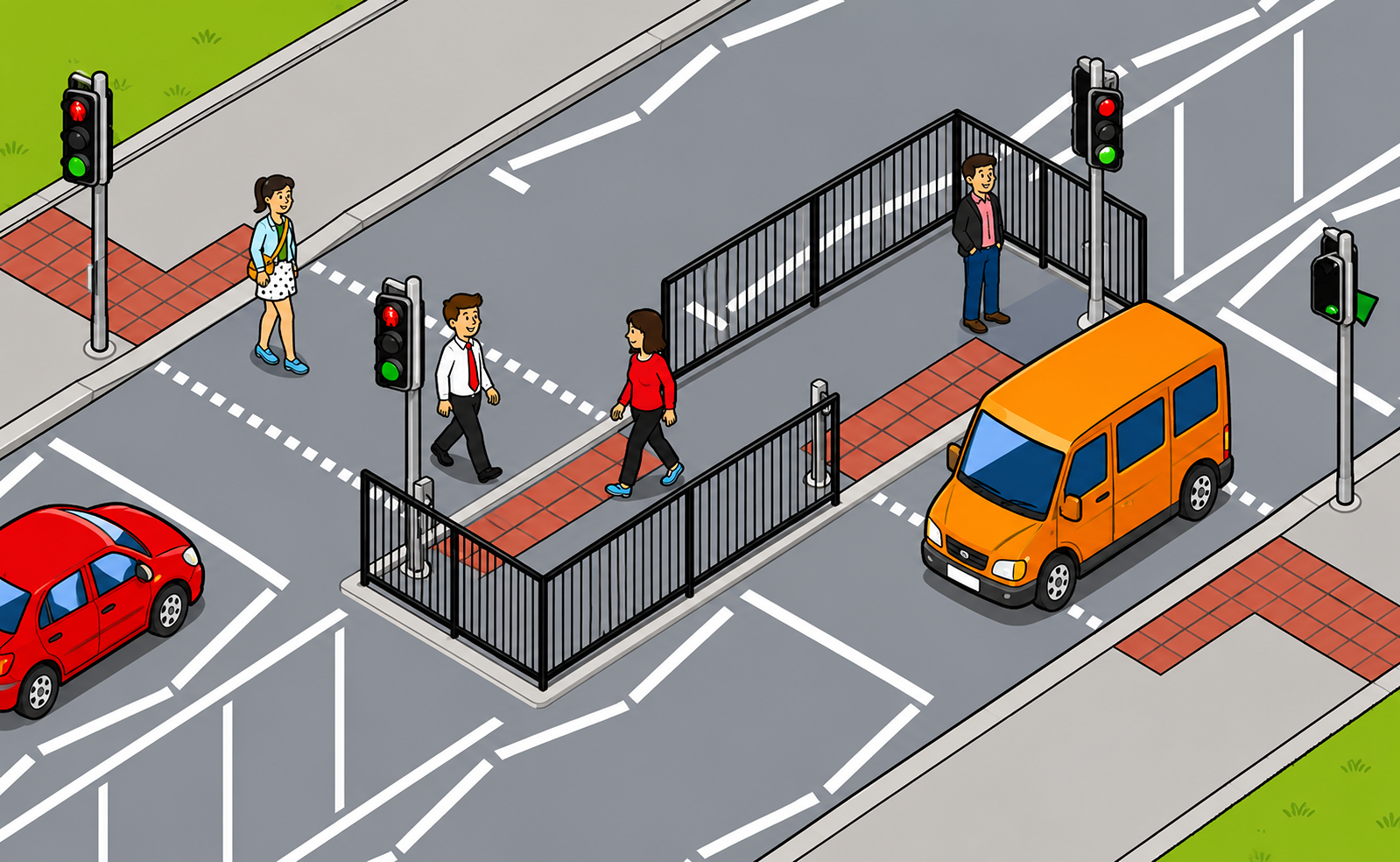
A staggered crossing is a pedestrian crossing split into two separate stages by a central refuge island.
Pedestrians cross one direction of traffic first, then wait on the island before crossing the second half of the road.
Each stage has its own signals, markings, or crossing controls.
Drivers should be aware that pedestrians may be waiting on the refuge island between crossings.
Approach carefully and obey all crossing signals and road markings.
The design helps pedestrians cross busy or wide roads more safely.